कैरियर विकास
How to Know When It’s Time to Upskill or Reskill
It's not always obvious when you need to upskill or reskill, but knowing the right signals can help you stay relevant, competitive, and confident in your career. This guide explains how to recognize the signs, understand market trends, and choose the best learning strategies for your future.
विज्ञापन
It’s not always obvious when you need to upskill or reskill, but knowing the right signals can help you stay relevant, competitive, and confident in your career. This guide explains how to recognize the signs, understand market trends, and choose the best learning strategies for your future.
Recognizing the Need for Change in Your Skills
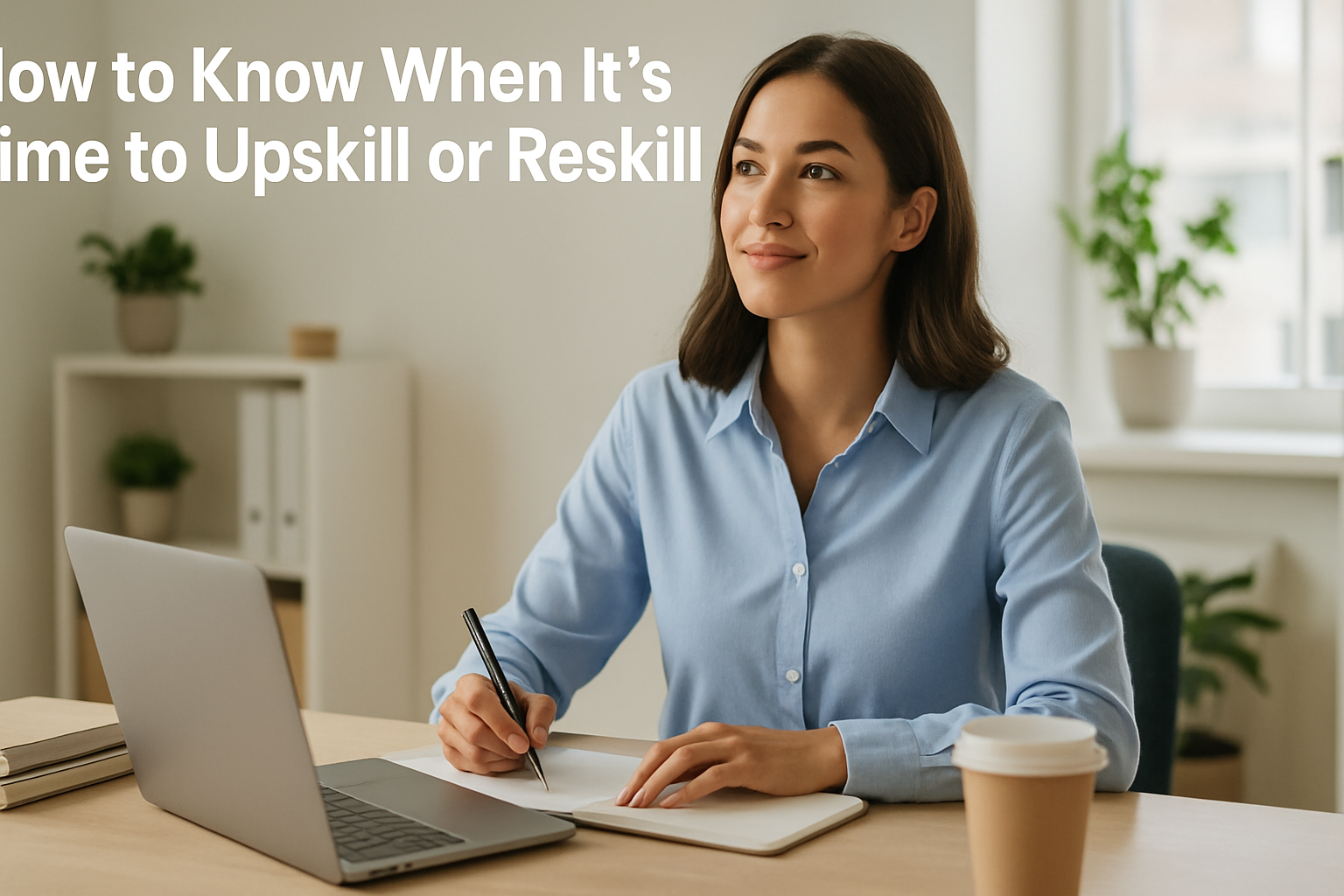
The world of work is changing faster than ever. Whether you’re a recent graduate, an established professional, or someone returning to the workforce, it’s natural to wonder if your current skills will carry you forward. Sometimes, the need to upskill (learn new competencies in your current field) or reskill (prepare for a different role or industry) is clear, but often, it’s more subtle. This article explores practical ways to spot the signs, interpret what they mean, and decide on your next steps.
Upskilling and reskilling are not just buzzwords—they are essential strategies for staying employable in dynamic markets. As automation, digital transformation, and global events reshape industries, proactively managing your skills can help you navigate uncertainty and seize new opportunities. We’ll walk through how to assess your situation, recognize external and internal signals, and plan your learning journey with confidence.
Understanding Upskilling vs. Reskilling
Before diving into the signals and strategies, it’s important to distinguish between upskilling and reskilling:
- Upskilling means improving your current skills or adding new ones that enhance your performance in your existing role or industry. For example, a marketing specialist learning advanced data analytics.
- Reskilling is about learning new skills for a different job or field, often because your current role is changing, becoming obsolete, or no longer aligns with your goals. For example, an administrative assistant learning coding to transition into web development.
Both approaches help future-proof your career, but your choice depends on your personal situation, career goals, and the signals you observe in your work environment and the wider job market.
Key Signals It’s Time to Upskill or Reskill
Recognizing when to act is a skill in itself. While every career path is unique, certain signals frequently indicate that it’s time to consider upskilling or reskilling. Here are some of the most common indicators:
| Signal | What It Means | Potential Action |
|---|---|---|
| New Technology Adoption | Your industry is integrating new tools, platforms, or processes. | Upskill to stay current with technology trends. |
| Job Role Changes | Your responsibilities are shifting, or new roles are emerging. | Upskill or reskill depending on the nature of the changes. |
| Declining Demand | Your role or industry is shrinking or being automated. | Reskill for roles in growth sectors. |
| Stagnation | You feel bored, unchallenged, or overlooked for promotions. | Upskill to access new opportunities or pivot to a fresh path. |
| Feedback from Employers | Performance reviews suggest skill gaps or areas for growth. | Targeted upskilling based on feedback. |
| Market Shifts | Industry news highlights changing customer needs or business models. | Stay informed and consider upskilling or reskilling as needed. |
| Layoffs and Restructuring | Colleagues are being laid off or departments are merging. | Assess your position and consider reskilling to increase security. |
Any of these signals—alone or in combination—can be a prompt to evaluate your skills and consider your next move.
Assessing Your Current Skills and Gaps
Before you decide whether to upskill or reskill, it’s essential to take stock of your existing abilities and identify where the gaps lie. A self-assessment can help you make informed choices and set practical goals.
- List your core skills: Include both technical (hard) and interpersonal (soft) skills relevant to your current role.
- Compare with job ads: Look at job listings for roles you’re interested in, and note any skills or certifications you lack.
- Seek feedback: Ask colleagues, mentors, or supervisors about your strengths and areas for improvement.
- Review performance data: Analyze recent performance reviews, KPIs, or project outcomes for patterns.
- Consider future trends: Research the skills predicted to be in demand in your industry over the next 3-5 years.
This process can highlight whether you’re missing foundational skills, need to deepen your expertise, or should pivot entirely. It can also clarify if your gaps are technical, digital, leadership-related, or about adaptability and learning agility.
How Market Shifts Affect Your Skills Strategy
Global trends and market shifts can have a direct impact on your job security and growth prospects. Understanding these changes helps you anticipate what skills will be most valuable—and when to start learning them.
Some common market shifts include:
- Digital transformation: The move to cloud computing, automation, artificial intelligence, and remote work tools is changing required skill sets across industries.
- Industry disruption: New business models (like gig work, subscription services, or e-commerce) can make certain roles obsolete while creating demand elsewhere.
- Regulatory or policy changes: Updates in data privacy, environmental standards, or labor laws may require new compliance skills.
- Economic cycles: Recessions, booms, or sector-specific downturns can shift hiring patterns and skill priorities.
Staying aware of these trends through news, industry reports, and professional associations can help you anticipate when upskilling or reskilling will be most strategic. Sometimes, acting early gives you a head start and a competitive edge.
Weighing Upskilling vs. Reskilling: Decision Criteria
Once you’ve identified signals and assessed your skills, the next step is to decide whether to upskill or reskill. This decision depends on several personal and external factors. Here are some criteria to consider:
- Industry outlook: Is your current field growing, stable, or shrinking? If it’s declining, reskilling may be necessary.
- Role relevance: Will your job exist in its current form in the next few years, or is it evolving rapidly?
- Personal interests and goals: Do you still enjoy your work, or are you seeking a new direction?
- Transferable skills: Do your current skills map easily to new roles, or will you need to start from scratch?
- Time and resources: Do you have the capacity to invest in formal education, or do you need quick, targeted learning?
Talking to people in your network—especially those who have made similar transitions—can provide insight into what each path might involve. Sometimes, a combination of upskilling and reskilling is the best approach, especially if you’re interested in hybrid roles or emerging fields.
Evaluating Your Current Skill Set: Gaps and Opportunities
Before deciding whether to upskill or reskill, it’s essential to take stock of your existing capabilities. This honest assessment will help you identify gaps that could hold you back and opportunities that could propel your career forward. Start by reviewing your current job description and recent performance feedback. Ask yourself:
- Are there recurring tasks or tools you struggle with?
- Do you feel confident with the most recent technologies or processes in your field?
- Have you received feedback about areas for improvement or development?
- Are your skills aligned with the direction your industry is heading?
Compare your skill set with job postings for roles similar to yours or for the next step up in your career. Note any required skills or certifications you don’t yet have. Also, consider soft skills—such as communication, adaptability, and critical thinking—that are increasingly important in rapidly changing work environments.
Upskilling vs. Reskilling: What’s the Difference?
Understanding the distinction between upskilling and reskilling is crucial for making the right decision for your career:
- Upskilling refers to enhancing your current skill set, typically to stay relevant in your existing role or to prepare for advancement in your current field. For example, a digital marketer learning advanced data analytics to better interpret campaign results.
- Reskilling involves learning new skills for a different job or career path, often because your current role is changing or becoming obsolete. For instance, a retail manager who trains in project management to transition into a corporate operations role.
Ask yourself: Are the changes in your industry incremental, requiring you to deepen your expertise (upskill)? Or are they transformational, requiring a shift to a new function (reskill)?
Key Signals That It’s Time to Upskill
Some indicators suggest that upskilling is the right path:
- Your industry is evolving, but your core role remains relevant—just with new tools or methodologies.
- You’re aiming for a promotion or leadership position within your current field.
- You notice colleagues or competitors adopting new technologies or processes that you’re unfamiliar with.
- Your performance reviews or project outcomes highlight specific technical or soft skills to develop further.
- Professional associations or industry publications recommend ongoing learning in your area of expertise.
Upskilling can be achieved through short courses, certifications, workshops, or on-the-job training. It’s often the best choice if you enjoy your work and see long-term potential in your field.
Key Signals That It’s Time to Reskill
Reskilling is likely necessary if you observe the following:
- Your role or industry is in decline due to automation, outsourcing, or shifting demand.
- There are fewer job postings for your current position, or required qualifications are dramatically different from your own.
- Your interests or values have changed, and you want to pursue a new career direction.
- Organizational restructuring or layoffs have affected your department, with new roles requiring unfamiliar competencies.
- You’re struggling to find relevance or fulfillment in your current work, despite efforts to upskill.
Reskilling usually involves more substantial learning, such as pursuing a new degree, attending a bootcamp, or completing a comprehensive training program. It may also require starting in a junior role in your new field, but can open up greater long-term stability and satisfaction.
How to Choose: Decision Criteria for Upskilling vs. Reskilling
Deciding whether to upskill or reskill can feel daunting, but a structured approach can clarify your path. Consider these criteria:
- Industry Outlook: Is your sector growing, stable, or shrinking? Research labor market data and trends.
- Personal Goals: Do you want to advance in your current field, or are you seeking a new challenge or better work-life balance?
- Transferable Skills: Can your existing skills be adapted to new roles, or do you need to start from scratch?
- Learning Investment: How much time, money, and energy are you willing to invest in further education or training?
- Support Systems: Does your employer offer learning resources, mentorship, or tuition assistance?
- Risk Tolerance: Are you comfortable with the uncertainty of changing careers, or do you prefer incremental growth?
Use these criteria to create a decision matrix or pros-and-cons list. Talk to mentors, career coaches, or colleagues who have made similar transitions. Their insights can help you weigh your options realistically.
Building Your Learning Strategy
Once you’ve chosen your direction, it’s time to map out your learning journey. An effective strategy includes:
- Goal Setting: Define what success looks like—whether it’s mastering a new software, earning a certification, or landing a new role.
- Resource Identification: Research available courses, books, podcasts, and online communities. Many reputable platforms offer free or low-cost options.
- Timeline Planning: Set realistic milestones and deadlines. Factor in your current workload and personal commitments.
- Accountability: Find a study group, mentor, or accountability partner to help you stay on track.
- Practical Application: Look for opportunities to apply new skills on the job, through volunteering, or with personal projects.
Document your progress and celebrate small wins along the way. Continuous learning is a marathon, not a sprint.
Comparing Learning Formats: What Works Best?
With a wide array of learning options available, choose what fits your style, schedule, and goals:
- Self-Paced Online Courses: Flexible and accessible, these are ideal for upskilling on specific topics.
- Instructor-Led Workshops or Bootcamps: Structured and immersive, best for reskilling or mastering complex skills quickly.
- Certifications and Degrees: Offer formal recognition and may be required for certain roles or industries.
- On-the-Job Training: Enables immediate application and learning in context, often supported by employers.
- Mentorship and Networking: Provides guidance, feedback, and real-world insights not found in textbooks.
Mix and match formats as needed. For comprehensive reskilling, you may combine formal training with hands-on projects and networking events.
Future-Proofing Your Career: Continuous Learning Mindset
Regardless of whether you upskill or reskill, adopting a mindset of lifelong learning is the most powerful way to future-proof your career. The pace of change in most industries means that learning should be ongoing, not a one-time event. Stay curious, seek feedback, and remain open to new ideas. Make time for regular skills audits and set annual learning goals.
Organizations increasingly value employees who are adaptable, proactive, and eager to grow. By demonstrating your commitment to continuous improvement, you signal your value—not just for your current role, but for future opportunities as well.
Practical Steps to Get Started
Ready to take action? Here’s a step-by-step checklist to begin your upskilling or reskilling journey:
- Assess Your Situation: Review your current skills, career goals, and industry trends.
- Decide Your Path: Determine whether upskilling or reskilling aligns best with your needs and aspirations.
- Research Learning Options: Identify relevant courses, certifications, and practical experiences.
- Set SMART Goals: Make your objectives Specific, Measurable, Achievable, Relevant, and Time-bound.
- Create a Learning Plan: Map out resources, timelines, and milestones.
- Engage Your Network: Seek advice, mentorship, and accountability from peers and professionals.
- Apply and Iterate: Put new skills to use, track your progress, and adjust your plan as needed.
Upskilling and reskilling are investments in your future employability and satisfaction. By staying alert to career signals, market shifts, and your own aspirations, you can make informed decisions that keep you adaptable and prepared for whatever comes next.
Integrating Upskilling and Reskilling into Your Career Development Plan
Effective career development is not just about responding to immediate changes—it’s about proactively managing your growth and adaptability over time. Integrating upskilling and reskilling into your ongoing career development plan ensures you’re not caught off guard by industry disruptions or role changes. Here’s how to weave these strategies into your professional journey:
- Schedule Regular Skills Audits: Set a recurring reminder—perhaps annually or biannually—to review your skills in relation to current and emerging job requirements. Use performance reviews, industry reports, and feedback from mentors to inform this audit.
- Align Learning with Career Milestones: Link your learning objectives to concrete career goals, such as preparing for a promotion, transitioning to a new field, or taking on leadership responsibilities. For example, if you aspire to become a team lead, focus on developing skills in team management, conflict resolution, and strategic planning.
- Create a Personal Learning Portfolio: Document your learning achievements, certifications, and project experiences in a portfolio. This not only helps you track your progress, but also provides valuable evidence of your capabilities when applying for new roles or negotiating raises.
- Leverage Employer-Sponsored Opportunities: Many organizations offer professional development programs, tuition reimbursement, or access to online course platforms. Take advantage of these resources and communicate your learning goals to your manager or HR department so they can support your growth.
- Balance Formal and Informal Learning: While degrees and certifications are important, don’t underestimate the value of informal learning—such as reading industry blogs, participating in webinars, or joining professional communities. This keeps your knowledge fresh and your network active.
- Set Aside Time for Reflection: After completing a learning initiative, take time to reflect on what you gained, how it applies to your current or future roles, and what you’d like to learn next. This cycle of learning and reflection ensures continuous improvement.
By making upskilling and reskilling a regular part of your career planning, you’ll be better prepared for unexpected changes and more confident in pursuing new opportunities. Remember, the most successful professionals treat learning as a lifelong process, not a one-time fix.
Overcoming Barriers to Upskilling and Reskilling
Even with the best intentions, many professionals encounter obstacles when trying to upskill or reskill. Understanding these common barriers—and how to overcome them—can make your transition smoother and more effective.
Time Constraints
Busy work schedules and personal commitments are among the most frequently cited barriers to ongoing learning. To address this:
- Choose self-paced or microlearning formats that fit into short time slots, such as lunch breaks or commutes.
- Block out regular, non-negotiable time for learning in your calendar—treat it as you would any important meeting.
- Seek support from your employer to adjust your workload or allocate time for professional development.
Financial Limitations
Courses, certifications, and degrees can be expensive. To make learning more accessible:
- Research free or low-cost resources, such as MOOCs (Massive Open Online Courses), open courseware, and professional association webinars.
- Apply for scholarships, grants, or employer tuition assistance programs.
- Consider learning options with a strong ROI—sometimes a short, targeted course can deliver more immediate career benefits than a long, costly program.
Lack of Confidence or Fear of Change
It’s natural to feel apprehensive about learning new skills or switching career paths, especially if you’ve been in the same role or industry for a long time. To build confidence:
- Start small with beginner-friendly courses or workshops to gain momentum.
- Connect with others who have successfully upskilled or reskilled—peer support and mentorship can be highly motivating.
- Frame learning as an experiment rather than a high-stakes commitment. Allow yourself room to explore and fail safely.
Uncertainty About What to Learn
With so many skills and courses available, it can be overwhelming to decide where to focus. To clarify your learning priorities:
- Research job postings in your target field and identify recurring skills and qualifications.
- Consult with industry professionals, career coaches, or mentors for insights on in-demand skills and emerging trends.
- Use skills assessment tools or career quizzes to reveal your strengths and development areas.
Motivation and Accountability
Staying motivated over the long term can be challenging, especially if progress feels slow. To stay on track:
- Set clear, achievable goals and celebrate milestones along the way.
- Join study groups, online forums, or learning cohorts to share experiences and encouragement.
- Regularly revisit your “why”—remind yourself how upskilling or reskilling supports your broader career and life objectives.
By anticipating these barriers and planning strategies to overcome them, you’ll be better equipped to follow through on your learning commitments. Remember, every step you take toward upskilling or reskilling brings you closer to a more secure, adaptable, and fulfilling career.
प्रवृत्ति विषयें

कार्टाओ डे क्रेडिटो बीएमजी गैलो: पैरा टोरसेडोर्स डो एटलेटिको माइनिरो!
बीएमजी गैलो क्रेडिट कार्ड के रूप में विवरण के रूप में शून्य अनुदान, कैशबैक की पेशकश करता है और टॉरसेडोर के लिए विशेष लाभ प्राप्त करता है।
पढ़ते रहते हैं

टिंडर का उपयोग कैसे करें: गलतियाँ जो आपको मैच करने से रोकती हैं
जानें कि टिंडर का इस्तेमाल कैसे ज़्यादा रणनीतिक तरीके से करें और उन गलतियों से बचें जो आपके असली मैच पाने की संभावनाओं को नुकसान पहुँचाती हैं। जानने के लिए और पढ़ें!
पढ़ते रहते हैंआपको यह भी पसंद आ सकता हैं

शादी के लिए सबसे अच्छे डेटिंग ऐप्स? साल के सबसे बेहतरीन ऐप्स देखें
2025 में विवाह के लिए सर्वश्रेष्ठ डेटिंग ऐप खोजें और उन लोगों के साथ वास्तविक संबंध खोजें जो वास्तव में प्रतिबद्धता की तलाश में हैं।
पढ़ते रहते हैं
केएफसी में नौकरी के अवसर: लचीले घंटे और करियर में उन्नति
अंशकालिक और प्रबंधन भूमिकाओं सहित केएफसी नौकरी के अवसरों का अन्वेषण करें, साथ ही पदों, लाभों और कैरियर विकास पथों की जानकारी भी प्राप्त करें।
पढ़ते रहते हैं
Apple करियर के अवसर: US$145,313 तक कमाएँ
एप्पल में कैरियर के अवसर प्रतिस्पर्धी वेतन, नवाचार और गतिशील कार्यस्थल प्रदान करते हैं जो रचनात्मकता और व्यावसायिक विकास को बढ़ावा देते हैं।
पढ़ते रहते हैं


